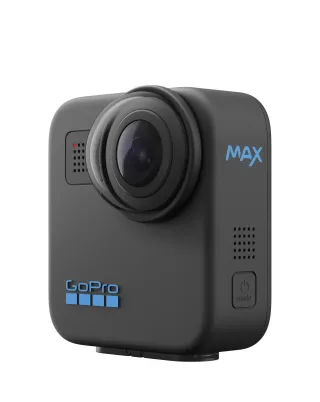
The GoPro MAX is not new, and that is precisely why it is interesting. A 360 camera that once sat at the top of the range now sells for less than many mid-range action cameras, which makes it the cheapest credible way to find out whether 360 shooting suits you.
Shoot first, aim later
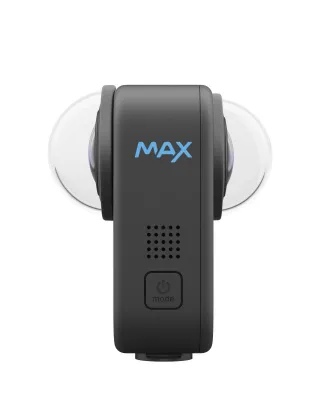
The pitch for any 360 camera is simple: two fisheye lenses record the entire sphere, so framing becomes an editing decision rather than a shooting one. You clamp it to a bike, ski pole or bag strap, press record, and afterwards pan around the footage to find the shot. For anyone who has ever come home with a perfectly steady video pointed at the wrong thing, this is a revelation.
The invisible selfie stick effect remains the party trick. Hold the MAX on a pole and the software removes the pole, producing floating, orbiting shots that look drone-like. It still gets a reaction, years after launch.
The resolution reality check
Here is the honest part. The MAX captures 5.6K of 360 footage, but that resolution is wrapped around an entire sphere. When you crop out a normal flat video, you are using a slice of it, and the result lands somewhere around good 1080p rather than crisp 4K. In bright daylight it looks fine. Indoors and at dusk, the small sensors show their limits.
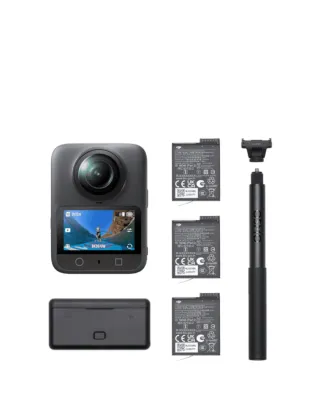
This is not a flaw unique to the MAX — it is the fundamental trade of 360 capture — but modern cameras start from a much higher resolution, which is exactly what the GoPro Max 2 addresses.
A good camera even when you ignore the 360
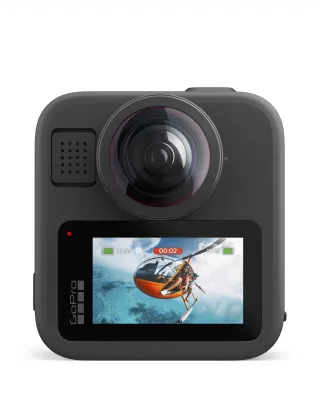
Switch to HERO mode and the MAX becomes a single-lens action camera with a front-facing screen and Max HyperSmooth stabilisation, which is genuinely one of the steadiest modes GoPro has shipped. For talking to camera while walking, it is more useful than the resolution figures suggest.
Living with it
Two practical warnings. First, the lenses bulge outwards and scratch easily — use the lens caps every single time it goes in a bag, because a scratch sits permanently in the middle of every sphere you record. Second, budget time for editing. Reframing 360 footage is creative and enjoyable, but it is not fast, and a phone or laptop will work hard doing it.
Who should buy it
Buy the MAX if you are curious about 360, shoot mostly in daylight, and would rather spend the difference on mounts and a spare battery. Buy a current-generation 360 camera if you need sharp, deliverable 4K from your reframed clips. And if you only ever want conventional footage, a straightforward action camera like the GoPro HERO will give you a better image for the money.