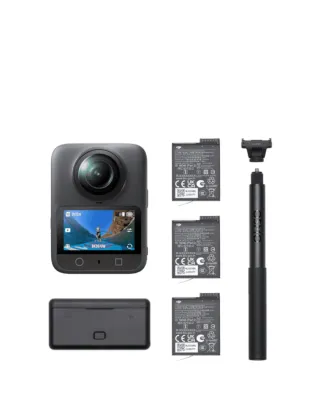
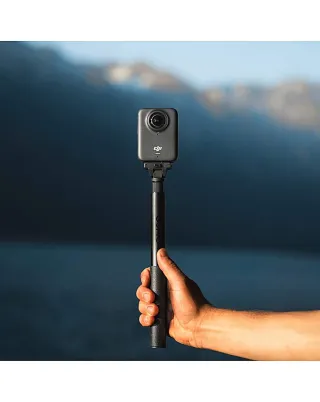
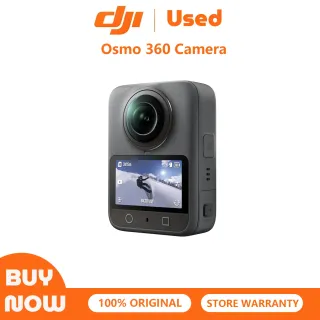
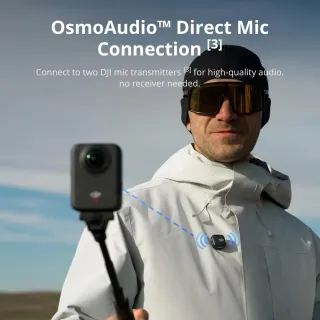
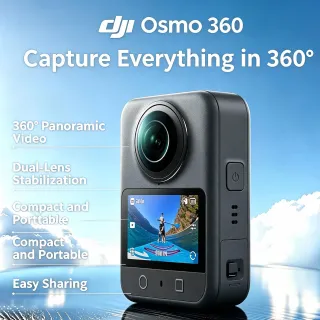
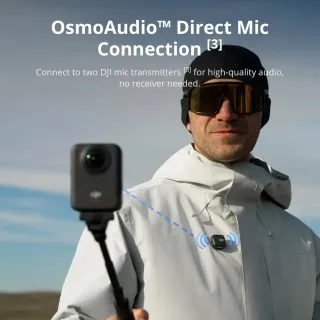
For years GoPro and Insta360 had the 360 camera market to themselves. The DJI Osmo 360 is DJI’s first entry, and rather than chase features it attacks the format’s oldest weakness: image quality once the light fades.
The sensor is the story
A 360 camera spreads its resolution around an entire sphere, then you crop a normal video out of it. That makes every pixel matter, and it is why 360 footage traditionally looks soft and noisy indoors. DJI’s answer is a square sensor design that delivers two 1-inch 360 image fields, with large 2.4μm pixels and an f/1.9 aperture. More light per pixel means cleaner footage at dusk, in city streets at night and indoors. There is also a SuperNight mode for genuinely dark scenes.
8K, and 10-bit everywhere
Native 8K/30 is the baseline, with 8K/50 available and a 4K/100 mode for up to four-times slow motion. Every mode records 10-bit colour, and D-Log M is there for anyone who grades. DJI quotes 13.5 stops of dynamic range, which is what keeps a sunset sky and the person in front of it both correctly exposed.
What 360 still asks of you
None of this removes the fundamental trade of the format: you shoot everything and decide the framing later, which takes time in the edit. 8K files also need a fast, high-endurance card and a computer that can handle them. If you want footage ready to post straight off the camera, a conventional action camera like the Osmo Action 6 is the easier tool.
Water, carefully
DJI’s own guidance is explicit: make sure the battery and USB-C covers are sealed, and do not use the bare camera for long periods underwater. Treat the dive case as essential for swimming and snorkelling.
Osmo 360 vs GoPro Max 2
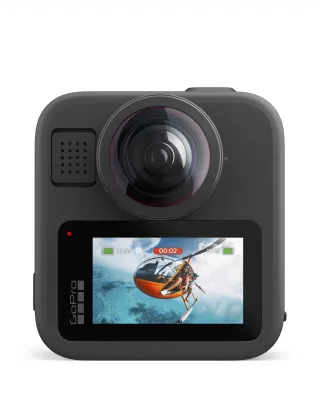
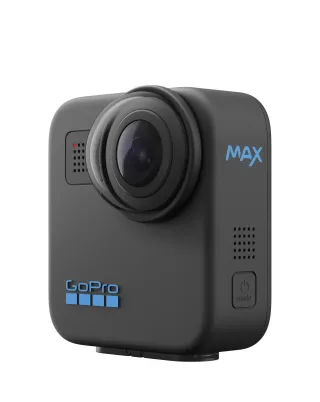
The GoPro Max 2 also shoots 8K 360 and has one feature DJI cannot match: replaceable lenses, which turn the most fragile part of a 360 camera into a consumable. The Osmo 360 answers with its sensor, aperture and 10-bit colour. Buy the DJI if low light is your priority; buy the GoPro if you are hard on equipment. Both are compared in our action camera guide.