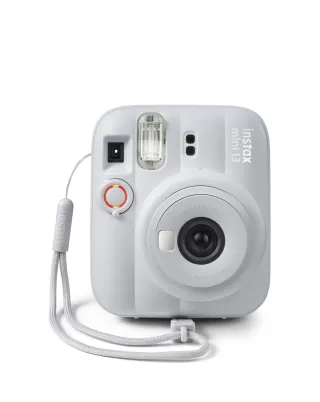
Instant photography is not about image quality. It is about handing someone a physical picture thirty seconds after taking it, and the Fujifilm Instax Mini 12 understands that better than almost anything else on the market.
Designed so nothing can go wrong
You twist the lens barrel to switch the camera on. Twist again and it enters close-up mode. Press the shutter and a credit card-sized print emerges. That is the entire interface, and the simplicity is deliberate — this is a camera designed for parties, weddings, holidays and children, where fiddling with settings means missing the moment.
The important technical work happens invisibly. Automatic exposure reads the scene and sets flash power accordingly, which fixes the classic instant camera failure of blown-out faces against black backgrounds. Indoors, at night, at a table in a dim restaurant, the Mini 12 gets it broadly right.
The close-up mode is genuinely clever
Because you look through a viewfinder that sits above and beside the lens, close-up shots have always suffered from parallax — you frame a face and the print cuts off the top of their head. Switching to close-up mode shifts the viewfinder image to compensate. Small detail, noticeably better portraits.
The real cost is the film
Be honest with yourself before buying any instant camera: the camera is the cheap part. Every photograph costs money, and a lively evening can go through a couple of packs without anyone noticing. Buying film in twin or multi-packs makes a substantial difference to the per-shot price, and bundles that include film are usually better value than buying the camera alone.
Who should buy it
First-time instant camera buyers, gift buyers, parents, and anyone running an event who wants guests to leave with something physical. If you want more creative control — double exposures, longer exposures, filters — look at the Instax Mini 99. If you want to choose which shots to print, the hybrid Instax Mini Evo is the smarter buy.