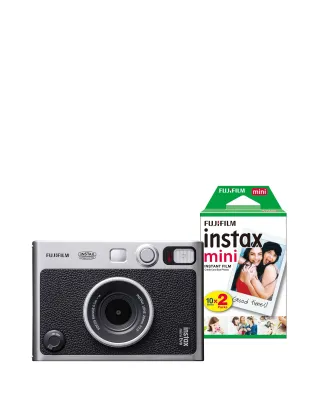
Every instant camera owner knows the feeling: the shot goes wrong, the print develops anyway, and you have just spent real money on a photograph of someone blinking. The Instax Mini Evo is Fujifilm’s answer, and it is a smart one.
Digital first, film second
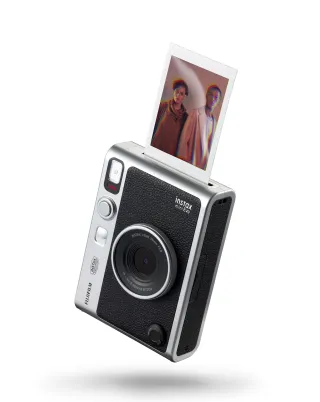
The Evo captures to a digital sensor and shows you the result on a small rear screen. Only when you decide a photo deserves to exist physically do you pull the print lever — a lovely mechanical action — and watch it emerge. The consequence is straightforward: you stop wasting film, and the camera slowly pays for the premium you paid to buy it.
The dials are the fun part
Two physical dials control the look. One applies lens effects, the other film effects, and between them there are around a hundred combinations — soft focus, light leaks, vignettes, monochrome, faded retro colour. Because they are real dials rather than menu entries, experimenting feels like playing with a camera rather than operating a device.
It is also a phone printer
Pair it with the app and you can print pictures from your phone onto Instax film. That is more useful than it sounds: the best photograph of an evening is often already on someone’s phone, and being able to hand them a physical copy of it is exactly the trick instant cameras exist to perform.
Where it falls short
The digital image quality is modest — this is not a camera to replace your phone for everyday photos, and the small sensor shows in dim light. Prints remain credit card-sized. And the deliberate print step, while the whole point, means it lacks the immediate magic of a camera that spits a picture out unbidden.
Who should buy it
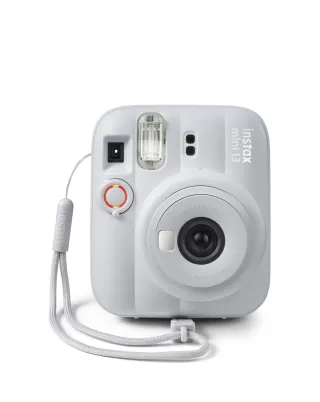
Adults who like the idea of instant photography but resent the waste, anyone who prints regularly from their phone, and anyone who enjoys the physical ritual of dials and levers. For pure party duty, a simpler Instax Mini 12 costs far less and does the one job well.