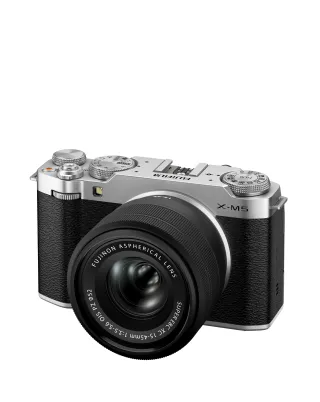
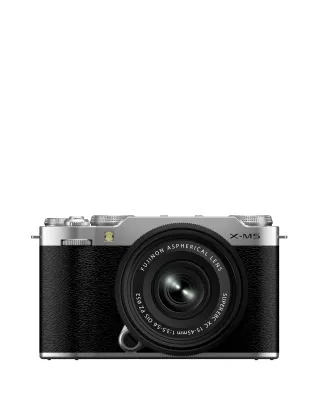
There is a particular kind of camera that gets used far more than its specifications justify, simply because it is small enough to bring along. The Fujifilm X-M5 is firmly in that category.
Small by design, not by compromise
Fujifilm removed the viewfinder hump, which is what allows the body to be this compact and this light. You compose on the rear screen, phone-style. In bright sun that is a genuine limitation; the rest of the time it is barely a thought, and the size benefit is constant.
The film simulation dial
Putting the film simulations on a physical dial is a small change with a large effect. Instead of a setting you forget about, the look becomes a decision you make before each shot — Classic Chrome for street, Velvia for landscape, Acros for portraits. Files come out of the camera finished, which for most people means less editing and more shooting.
Video punches above its size
For such a small body the video specification is generous, and the articulating screen makes it usable for filming yourself. The absence of in-body stabilisation is the main caveat: for handheld walking footage you will want a stabilised lens or a gimbal.
What you give up
The viewfinder, in-body stabilisation, a deep grip and long battery life. If you shoot in bright conditions, use heavy lenses, or work all day, the X-S20 is the more comfortable and more capable camera — and it costs accordingly.
Who should buy it
Street and travel photographers, creators who value low weight, and anyone attracted to Fujifilm colour who does not want to carry a large camera to get it. Pair it with a small prime and it becomes a genuinely delightful everyday companion.