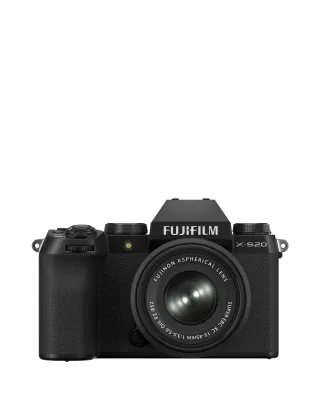
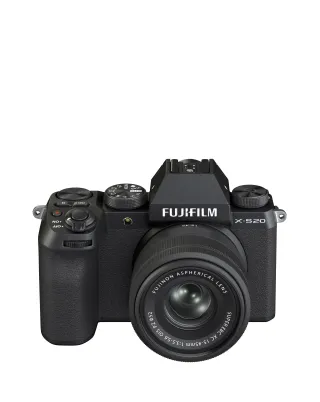
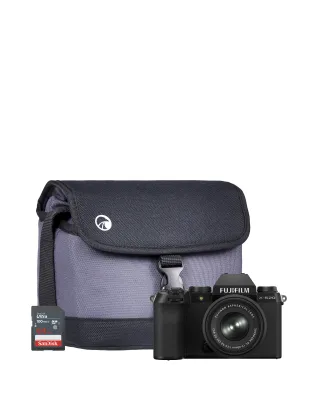
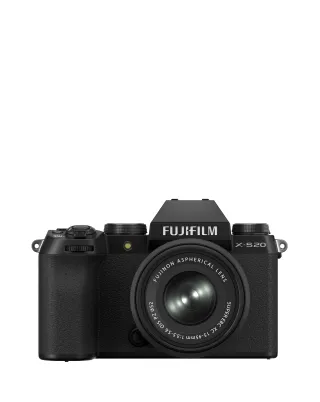
Fujifilm occupies an unusual position: it makes cameras people buy for how the pictures look rather than what the specifications say. The X-S20 is the model where that character meets a properly complete feature set.
Film simulations change your workflow
Fujifilm’s colour profiles are modelled on its own film stocks, and they are applied as you shoot. Choose Classic Chrome and you get restrained, documentary-looking files. Choose Velvia and landscapes gain punch. Acros produces genuinely lovely black and white.
The practical consequence is that photographs come off the card looking finished. For anyone who has abandoned editing through sheer tedium, that is worth more than a resolution increase.
Stabilisation and battery life
In-body image stabilisation is the feature that makes this camera flexible. Handheld shots at slow shutter speeds stay sharp, low light becomes workable without a tripod, and video is steady enough to use without a gimbal for static and slow-moving shots.
Battery life, meanwhile, is excellent by mirrorless standards — enough that a day of shooting no longer requires a pocket full of spares.
A serious video camera
High-resolution capture, log profiles for grading and a fully articulating screen mean the X-S20 is used professionally for video as well as stills. Combined with stabilisation, it is a credible one-camera solution for a small production.
What to watch
It is the most expensive APS-C body Fujifilm sells, and the bundled kit zoom does not do the sensor justice — budget for a prime or a better zoom if you can. The menu system takes some learning, though the physical dials mean you spend less time in menus than on many rivals.
Who should buy it
Hybrid shooters, travel photographers, wedding second-shooters and content creators who want one camera to cover everything. If size and price matter more than stabilisation, the X-M5 is the lighter, cheaper alternative.