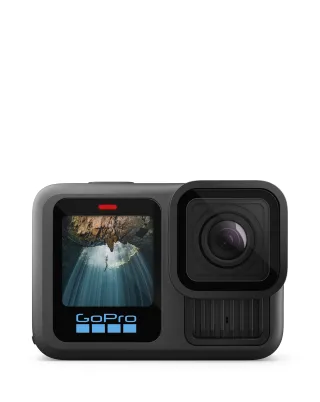
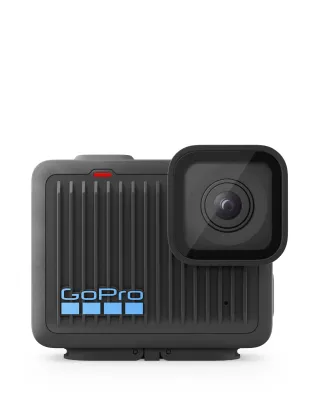
GoPro has been iterating on the same excellent formula for years, and the HERO13 Black is the clearest example yet of a company refining rather than reinventing. The sensor and the video modes are broadly familiar. What is new is a magnetic lens mount, a bigger battery, and a set of small quality-of-life fixes that add up to a better camera to actually live with.
What you get for the money
The headline specifications read much like the HERO12 Black: a 1/1.9-inch sensor, up to 5.3K60 video, 4K120, 27MP stills, HyperSmooth stabilisation with Horizon Lock, and waterproofing to 10m without a housing. That is not a criticism. This is a mature platform, and footage from the HERO13 Black is sharp, punchy and remarkably stable, with the kind of colour that needs no work before it goes online.
The two changes you feel immediately are the battery and the mount. The 1900mAh Enduro cell is a real improvement over the previous generation, and it turns the HERO from a camera you nurse through a day into one you can more or less forget about. The magnetic latch mount is quicker and more confident than the old folding fingers, which matters when you are switching between a chest harness and a bar mount in the cold.
The lens system is the actual upgrade
The HB-Series lenses are what separates the HERO13 Black from every GoPro before it. Attach one and the camera recognises it, adjusts its settings, and gives you a genuinely different image rather than a digital crop. The Ultra Wide lens produces the exaggerated, immersive perspective people associate with mounted POV footage. The Macro lens focuses far closer than an action camera has any right to. The Anamorphic lens delivers a wide, cinematic frame with the flare characteristics that go with it.
The catch is cost. Each lens is a meaningful additional spend on a camera that is not cheap to begin with, and none of your existing GoPro lens mods will fit. Treat the lenses as an optional system you grow into rather than something you need on day one.
Who the HERO13 Black is for
If you ride, ski, surf, dive or race, this is the default choice, and it is the default for good reasons: the mounting ecosystem is vast, the stabilisation is exceptional, and the footage needs almost no attention afterwards. It also handles being knocked about in a way that no phone or compact camera will tolerate.
If you mainly shoot handheld pieces to camera or travel vlogs, look hard at a gimbal-stabilised pocket camera instead. An action camera has a small sensor and a very wide lens, which is exactly wrong for talking-head footage and indoor light. For that job a DJI Osmo Pocket 3 will flatter you far more.
HERO13 Black vs HERO12 Black
The honest comparison: image quality is very close. You are paying for the lens mount, the larger battery, faster wireless transfer and the small refinements. Coming from a HERO10 or older, the upgrade is substantial and you will notice it in every clip. Coming from a HERO12, you are better off spending the difference on mounts, batteries and a fast microSD card.
Which bundle should you buy?
Three versions turn up in UK retailer feeds and the differences matter more than the names suggest:
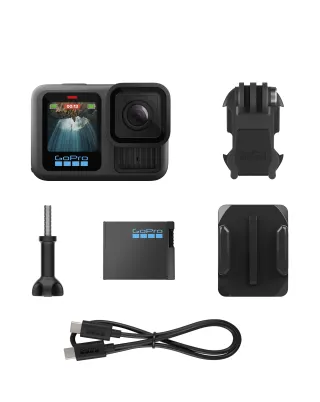
- HERO13 Black (standard) — the camera, one battery, a mounting buckle and thumb screw. The right pick if you already own GoPro accessories.
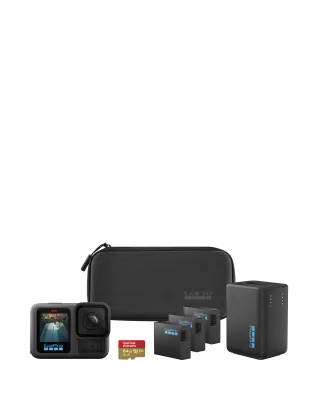
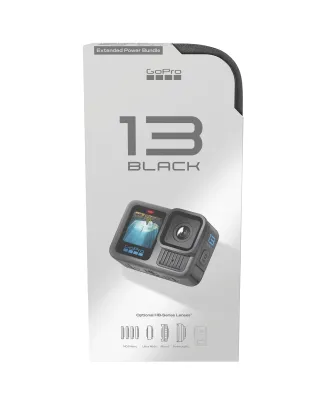
- Power Bundle — adds spare Enduro batteries and usually a charging case. If you shoot a full day away from power, this is the sensible one.
- Creator Edition — bundles the Volta grip-cum-battery-cum-tripod, a Media Mod for external audio and a light. Genuinely good value if you are filming yourself talking, and pointless if you are not.
Prices move around a lot between retailers, particularly on the bundles, so it is worth checking the live comparison below before committing to a version.
Practical notes before you buy
Buy a high-endurance microSD card rated for sustained video writes — a slow card is the single most common cause of dropped recordings that look like camera faults. Expect the body to get warm on long 5.3K takes; that is normal and the camera will protect itself if it needs to. And if you shoot in cold conditions, keep the spare battery in an inside pocket, because low temperatures roughly halve what you get from a cell.