Pocket & Vlogging Cameras review

DJI Osmo Pocket 4 review: 4K/240fps and 14 stops in your pocket

The Pocket 4 keeps the 1-inch sensor and gimbal that made its predecessor famous, then adds 4K at 240fps, 2x lossless zoom and 14 stops of dynamic range. Here is whether it is worth the upgrade.

The DJI Osmo Pocket 4 had an awkward job: replace a camera that most reviewers, this one included, considered close to perfect. Its answer is not to redesign anything, but to sharpen every specification that limited the previous model.

What is genuinely new

Three things matter. The first is dynamic range — 14 stops, paired with 10-bit D-Log recording. That combination is what separates footage you can grade from footage you must accept as shot. High-contrast scenes, the ones that ruin small-camera video, now hold both the sky and the shadow.

The second is 2x lossless zoom, driven by a dedicated button. It crops into the sensor rather than interpolating pixels, so the tighter framing stays sharp. In use it is closer to having a second lens than a digital zoom, and it is far faster than pinching at a touchscreen while walking.

The third is 4K at 240fps. Eight-times slow motion at full resolution is a genuinely remarkable thing to find in a camera this size, though be honest with yourself about how often you will use it — and remember that very high frame rates are hungry for light.

What carried over, correctly untouched

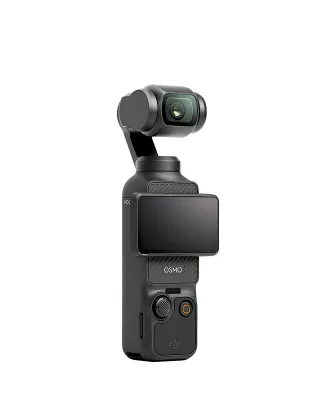
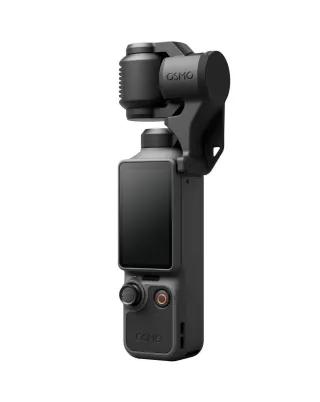
The 1-inch sensor, the three-axis mechanical gimbal, the rotating screen that flips between horizontal and vertical, and the fast subject tracking all return. This remains the formula: real stabilisation instead of software cropping, a sensor big enough to cope indoors, and the ability to shoot vertical without throwing away half your frame.

The f/2.0 aperture also produces pleasant background separation, so portraits and pieces to camera have depth rather than looking flat.

Is it worth upgrading?

If you already own a Pocket 3, the answer depends entirely on whether you edit seriously. Colourists and anyone shooting in tricky light will feel the extra dynamic range on every clip. Someone posting straight from the camera will struggle to tell the two apart, and would be better off buying the older model cheaper and spending the difference on a microphone.

Coming from a phone or an older gimbal camera, the Pocket 4 is an easy recommendation and the current high point of the category.

Practical notes

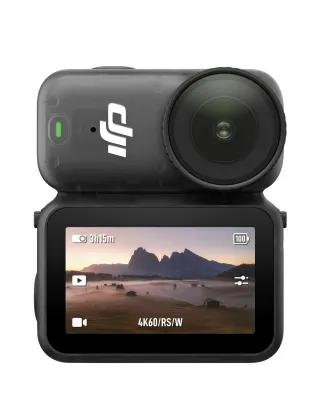
Buy a fast, high-capacity card — 4K/240 and 10-bit files are not small. Keep the gimbal cover on in transit, because the mechanism is exposed and precise. And treat rain as a hard limit; for wet and rough conditions an Osmo Action 6 is the right tool.
What we like

  • 4K/240fps slow motion is extraordinary in a camera this size
  • 14 stops of dynamic range and 10-bit D-Log for grading
  • 2x lossless zoom via a dedicated button
  • Same superb three-axis gimbal and rotating screen

What to watch

  • A meaningful step up in price from the Pocket 3
  • High frame rate files fill cards quickly
  • Still not weather sealed
  • Most buyers will never use 240fps

The verdict

The best pocket camera on the market, and a genuine upgrade rather than a refresh. The dynamic range and lossless zoom are what you will use daily; the 4K/240 is the party trick that occasionally saves a shot.

Where to buy — every version we track

Live prices from the retailers we track, updated daily. We may earn a commission if you buy through these links — it never changes what you pay.

Frequently asked questions

Does the Osmo Pocket 4 really shoot 4K at 240fps?

Yes. That gives you eight-times slow motion at full 4K resolution, which until recently required a dedicated cinema camera. Expect large files and be aware that very high frame rates need plenty of light to look their best.

What does 14 stops of dynamic range mean in practice?

It is the range between the darkest and brightest parts of a scene the camera can hold at once. More stops means skies that stay blue instead of blowing to white while faces remain properly exposed — the difference shows most at sunset, on the coast and in high-contrast interiors.

Is the 2x zoom really lossless?

It crops into the sensor rather than interpolating, so the 2x view keeps full resolution. One press of the dedicated button switches between 1x and 2x, which is far quicker than pinching a screen mid-shot.

Should I upgrade from the Osmo Pocket 3?

Only if you grade footage, shoot in difficult light, or genuinely want extreme slow motion. The Pocket 3 shares the same gimbal, 1-inch sensor and rotating screen, and remains superb for less money.

What is in the Creator Combo?

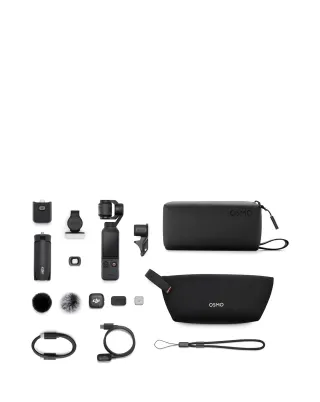
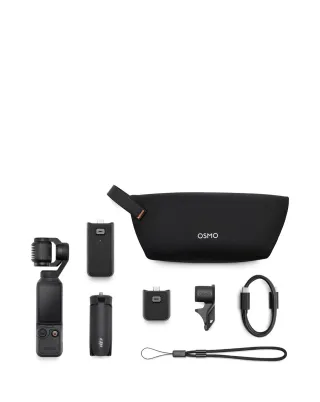
A wireless microphone, an extended battery handle and a mini tripod. For anyone recording narration or pieces to camera, the microphone alone justifies most of the difference.

More reviews