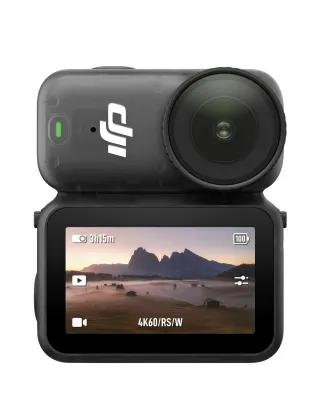
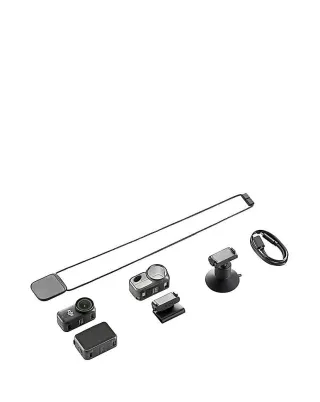
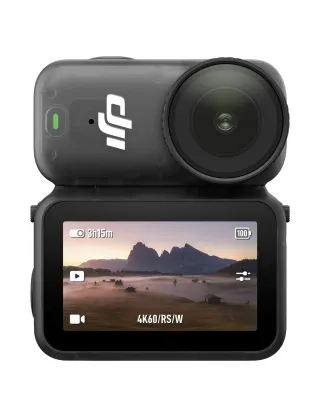
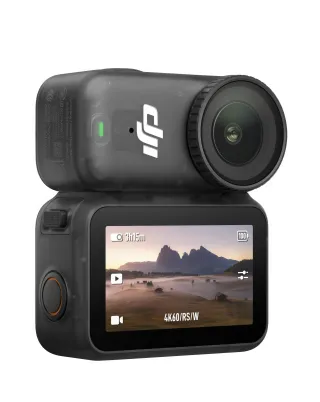
There is a category of shot that ordinary cameras cannot get, not because they lack resolution but because they are simply too big to be where the action is. The DJI Osmo Nano exists for those shots.
Small enough to change what you film
The Nano is thumb-sized and mounts magnetically on both sides, so it attaches to a shirt, a strap, a cap or a bag without a cage, a screw or a helmet mount. The practical result is that you stop staging footage. You clip it on before a bike ride, a climb or a walk with the dog and forget it is there, and what comes back is a genuinely first-person view rather than an obviously filmed one.
The image is better than the size implies
Inside is a 1/1.3-inch sensor — the same class of chip DJI puts in full-size action cameras — with up to 13.5 stops of dynamic range. That combination is why footage from something this small does not look like footage from something this small. Bright skies hold their colour, shadows keep detail, and clips cut together with material from bigger cameras without embarrassment.
Choose your storage carefully
Storage is built in, at 64GB or 128GB, and cannot be expanded. This is the one decision you cannot undo, so think about how you actually behave: if you are the sort to offload footage every evening, 64GB is fine; if cards and cameras sit untouched for weeks, buy the 128GB. The price difference is usually modest.
What it is not
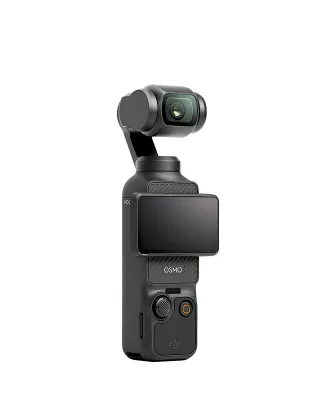
It is not a replacement for a gimbal camera. If you want beautifully smooth walking shots and deliberate composition, a DJI Osmo Pocket 3 is a far better tool. It is also not the camera for deep water or heavy crashes, where a properly armoured action camera belongs.
Who should buy it
Cyclists, climbers, skiers, hobbyists documenting work with their hands, parents wanting genuine eye-level footage, and anyone who already owns a main camera and wants a second angle running the whole time. It is a camera that works because it is never in the way.