Action Cameras review

GoPro Mission 1 Pro review: 8K60, Open Gate and 32-bit float audio

The Mission 1 Pro takes the 1-inch sensor and pushes it hard — 8K60 video, 4K at 240fps, 8K Open Gate capture, 10-bit log and 32-bit float audio. This is an action camera aimed squarely at professionals.

The GoPro Mission 1 Pro is what happens when an action camera stops apologising for being an action camera. It keeps the 1-inch sensor and GP3 processor of the standard Mission 1, then removes almost every limit above it: 8K60 video, 4K at 240fps, 10-bit log encoding, HLG HDR, a 240Mbps bit-rate and 32-bit float audio.

A specification list aimed at editors

Read that list again and notice who it is for. Log encoding only matters if you colour grade. HDR only matters if you deliver HDR. A 240Mbps bit-rate only matters if you push footage hard in post and want it to survive. These are not consumer features, and GoPro has not pretended otherwise.

The most quietly useful of them is 8K Open Gate. Recording the entire sensor area rather than a 16:9 crop means one take can become a widescreen edit, a square social post and a full-height vertical clip, each properly framed, each still sharp. For anyone producing the same content for several platforms, that alone can halve a shooting day.

Audio you can actually rescue

32-bit float recording deserves more attention than it usually gets. Action cameras live in environments with wildly unpredictable sound — wind, engines, crowds, sudden impacts — and conventional recording clips into permanent distortion when levels spike. Float audio captures a range wide enough that you can pull those peaks back down in editing. It turns a ruined take into a usable one.

What it costs you

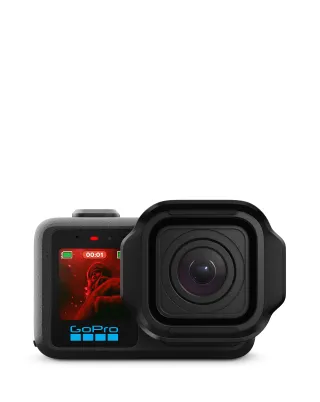
Money, storage and time. This is professional pricing on a camera whose files will fill drives quickly and demand a capable editing machine. It is also physically larger than the compact GoPros people are used to, because a 1-inch sensor requires a bigger lens in front of it.

None of that is a criticism if you are being paid for the footage. All of it is a reason to buy something else if you are not.

Who should buy it

Professional and semi-professional shooters: sports production, adventure documentary, motorsport, anyone cutting action footage into a graded timeline alongside cinema camera material. It is also a strong choice for creators who deliver to multiple aspect ratios daily and want to shoot once.

For everyone else, the standard Mission 1 offers the same transformative sensor and battery life for less, and the HERO13 Black remains the smarter buy if you want small, tough and simple. Live UK prices for all of them are compared below.
What we like

  • 8K60 and 4K240 from a 1-inch sensor
  • 8K Open Gate capture for maximum reframing latitude
  • 10-bit log encoding and HLG HDR for proper grading
  • 32-bit float audio makes clipped sound recoverable

What to watch

  • Expensive — this is professional pricing
  • Vast files need serious storage and a fast machine
  • Most of the feature set is wasted on casual use
  • Larger and heavier than a classic GoPro

The verdict

The most capable action camera GoPro has built, and the first that genuinely belongs on a professional shoot. If you grade your footage, mix your own audio and deliver in 4K, the spec sheet justifies itself. If you do not, buy the standard Mission 1 and spend the difference on mounts.

Where to buy

Live prices from the retailers we track, updated daily. We may earn a commission if you buy through these links — it never changes what you pay.

Frequently asked questions

What is 8K Open Gate?

Open Gate records the full area of the sensor rather than a cropped 16:9 slice. You get maximum resolution and the freedom to produce widescreen, square and vertical versions from one take — invaluable if you deliver the same footage to YouTube, Instagram and TikTok.

What does 32-bit float audio do?

It captures such a wide dynamic range that audio which would normally clip into distortion can be pulled back in editing. For a camera strapped to a motorbike or a chest harness, where levels are unpredictable, it removes the single most common way to ruin a take.

How slow can the slow motion go?

Up to 8x at 4K and 32x at 1080p, with 4K240/200 and 1080p480/400 modes. That is comfortably beyond what most dedicated cameras manage, let alone action cameras.

Mission 1 vs Mission 1 Pro?

Both share the 1-inch sensor and GP3 processor. The Pro adds 8K60 rather than 8K30, far higher slow-motion frame rates, 8K Open Gate, HLG HDR, a 240Mbps bit-rate and 32-bit float audio. If those terms mean something to your workflow, buy the Pro. If they do not, the standard Mission 1 gives you the same image quality benefits for less.

More reviews